
How it works
How do candle warmer lamps work?
A halogen bulb warms the top of a scented candle until the wax softens and releases fragrance. Nothing burns. Here is each part and why it matters.
The short answer
A candle warmer lamp is a heater and a lamp in one. The bulb shines down onto your candle. Heat from the bulb softens the wax at the surface, and as it warms, the fragrance oils in the wax evaporate into the air. The wick is never lit, so nothing burns.
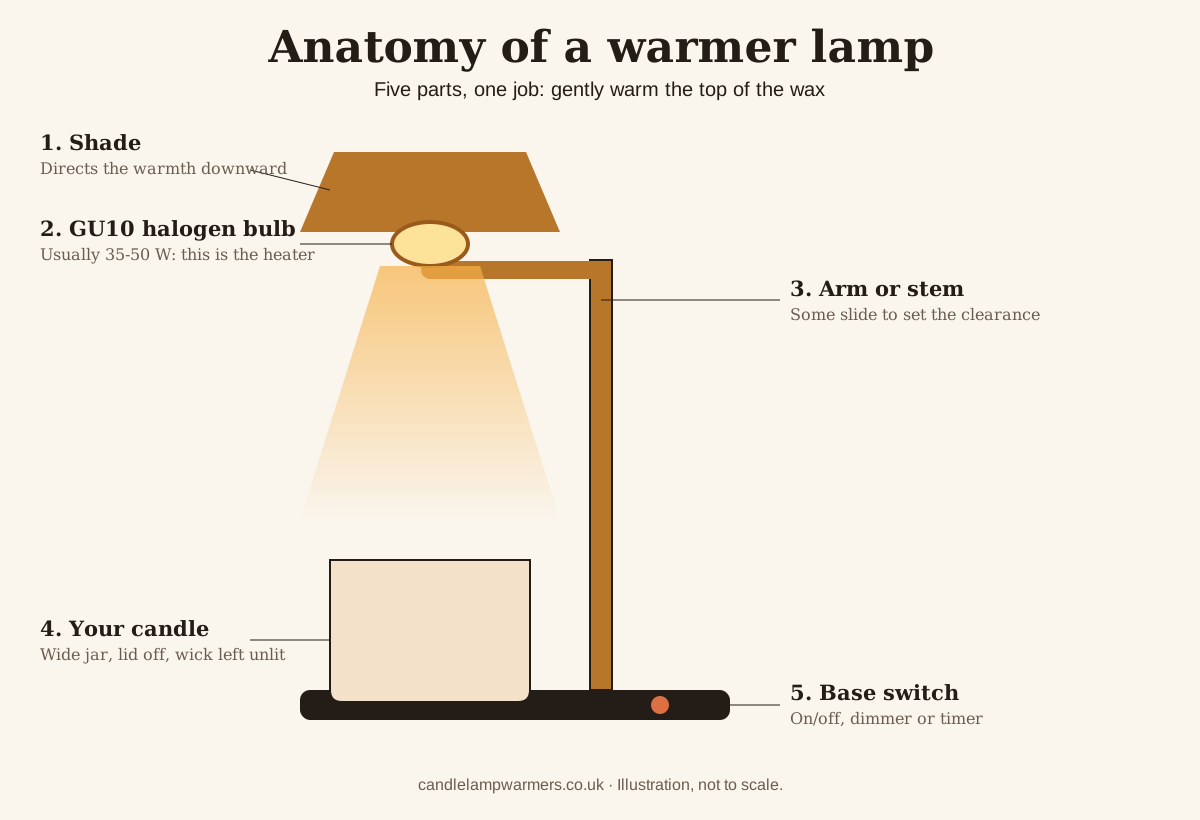
The five parts, and what each one does
1. The shade
It points the warmth and light down at the jar. Glass shades are common because they stay clear of the bulb and look good lit; fabric and rope shades are popular for style.
2. The halogen bulb
This is the heater. Most lamps take a GU10 halogen of around 35 to 50 W. See our bulb guide for which to buy and how to swap one safely.
3. The arm or stem
Some lamps fix the shade at one height; others slide or tilt. Adjustable ones let you set how far the bulb sits above the wax, which is the most useful setting you have.
4. The candle
A wide jar or tin works best, with the lid off. A wide surface gives the bulb more wax to warm. Read more in our guide to the best candles for a warmer lamp.
5. The base switch
Basic lamps are simply on or off. Better ones add a dimmer, which lowers heat and brightness, or a timer that switches the lamp off after a set number of hours.
What happens to the wax
Most container waxes begin to soften at roughly 45 to 65°C, and beeswax melts at around 62 to 65°C. The bulb brings the surface into that range, so you get a shallow pool of soft or liquid wax on top while the rest of the candle stays solid. The scent rises from that pool.
Because no flame is involved, the wick, the container and the colour of the wax stay as they were. That is why a candle can last through many more evenings than it would lit.
Getting the best results
- Mind the clearance. Too far away and the wax barely softens; too close and it can overheat. Start with the shade a hand-width or so above the surface and adjust from there, following your lamp's instructions.
- Centre the jar. The bulb should shine across the whole surface so it warms evenly.
- Be patient. Give it ten to twenty minutes to start, and longer in a cold room.
- Use the dimmer. Lower it once the room smells right to save power and gentle the glow.
- Use the timer or switch it off. Never leave any heat source on while the house is empty or you are asleep.
What it costs to run
A 50 W bulb for four hours uses 0.2 kWh, which is about 5p at 26p per kWh. We have worked out the numbers properly in how much a candle warmer lamp costs to run.
Ready to try one? Start with the full range of warmer lamps, or use the filters on that page to narrow by colour, timer and clearance.
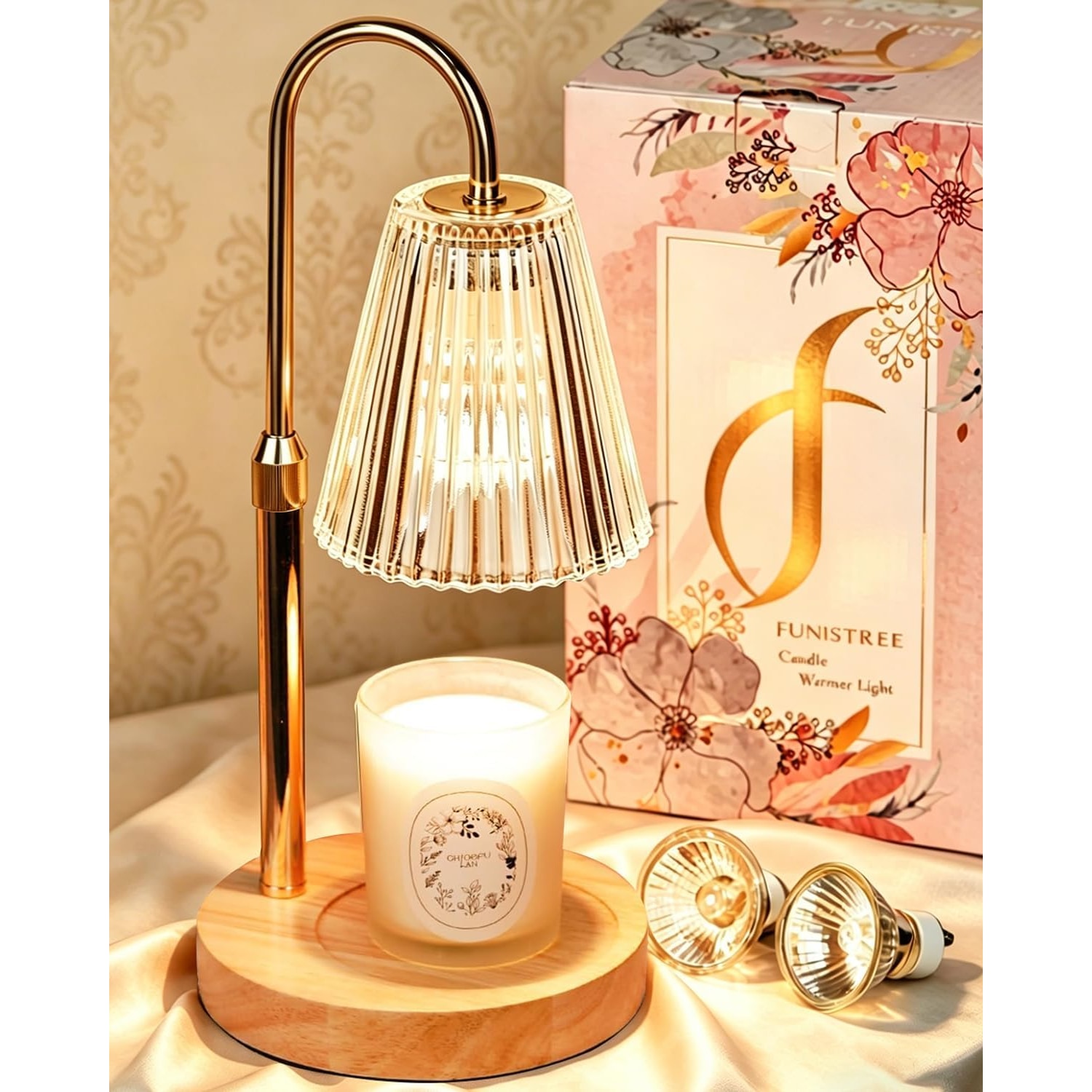
Lamps with the adjustments that matter


Questions people ask
Why does a candle warmer lamp use a halogen bulb?
A halogen bulb gives off both light and a useful amount of heat in a small space. The common GU10 halogen in a warmer lamp is chosen because it warms the wax surface enough to release fragrance. Most LED bulbs make very little heat, so they usually do not work.
How long until I smell the candle?
Usually within ten to twenty minutes, depending on the bulb, the distance to the wax, the room temperature and the wax itself.
Should the lid be on?
No. Take the lid off, leave the wick unlit, and place the open jar directly under the bulb.