
Candle care
Candle tunnelling: why it happens and how to fix it
Tunnelling happens when a flame melts only a small circle of wax. A warmer lamp softens the whole surface, which is why it is the easiest rescue.
What is tunnelling?
Tunnelling is when a candle burns straight down the middle, leaving a ring of unmelted wax around the edge. The wick ends up sunk in a hole, burns poorly, and a good chunk of wax in the jar is wasted.
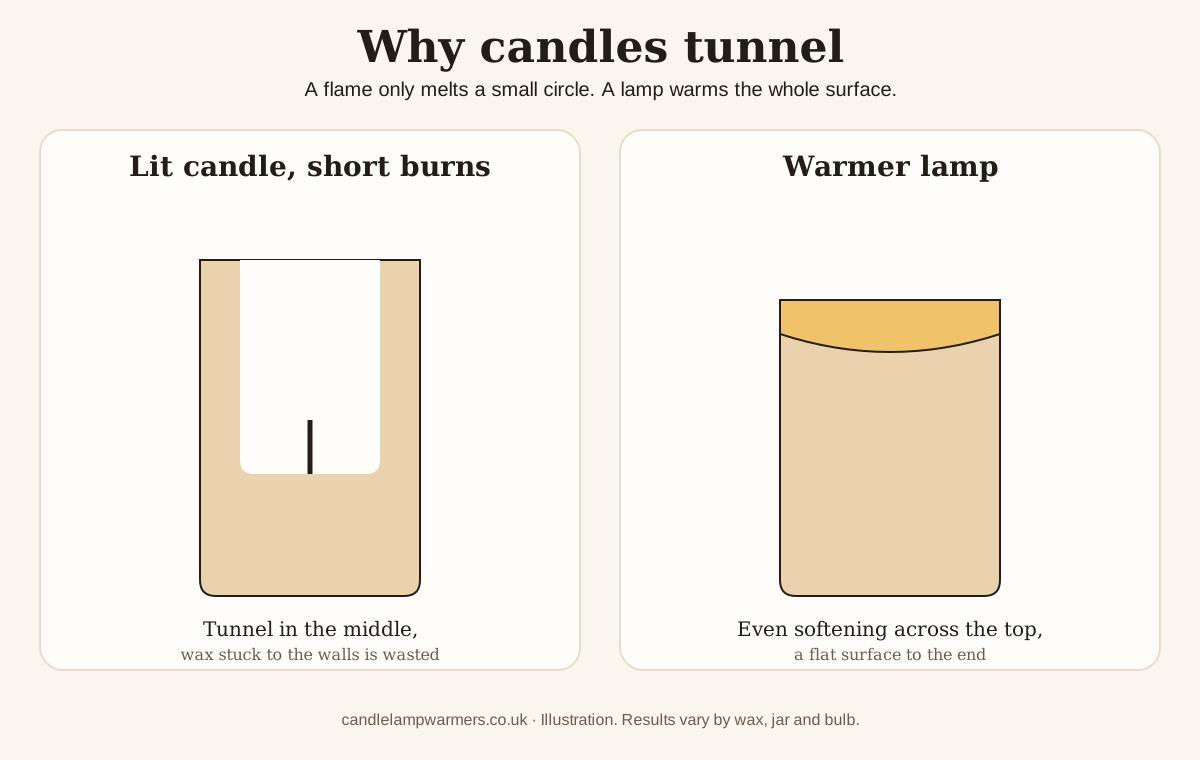
Why it happens
- Short burns. The flame melts a circle the size of its own heat. Blow it out early and the rest stays solid.
- Wax memory. Candle wax tends to melt back to wherever it melted before, so each burn follows the first.
- A wide jar and a single wick. A small flame can't reach a big jar's edge.
How to fix a tunnelled candle with a warmer lamp
- Take off the lid and leave the wick unlit.
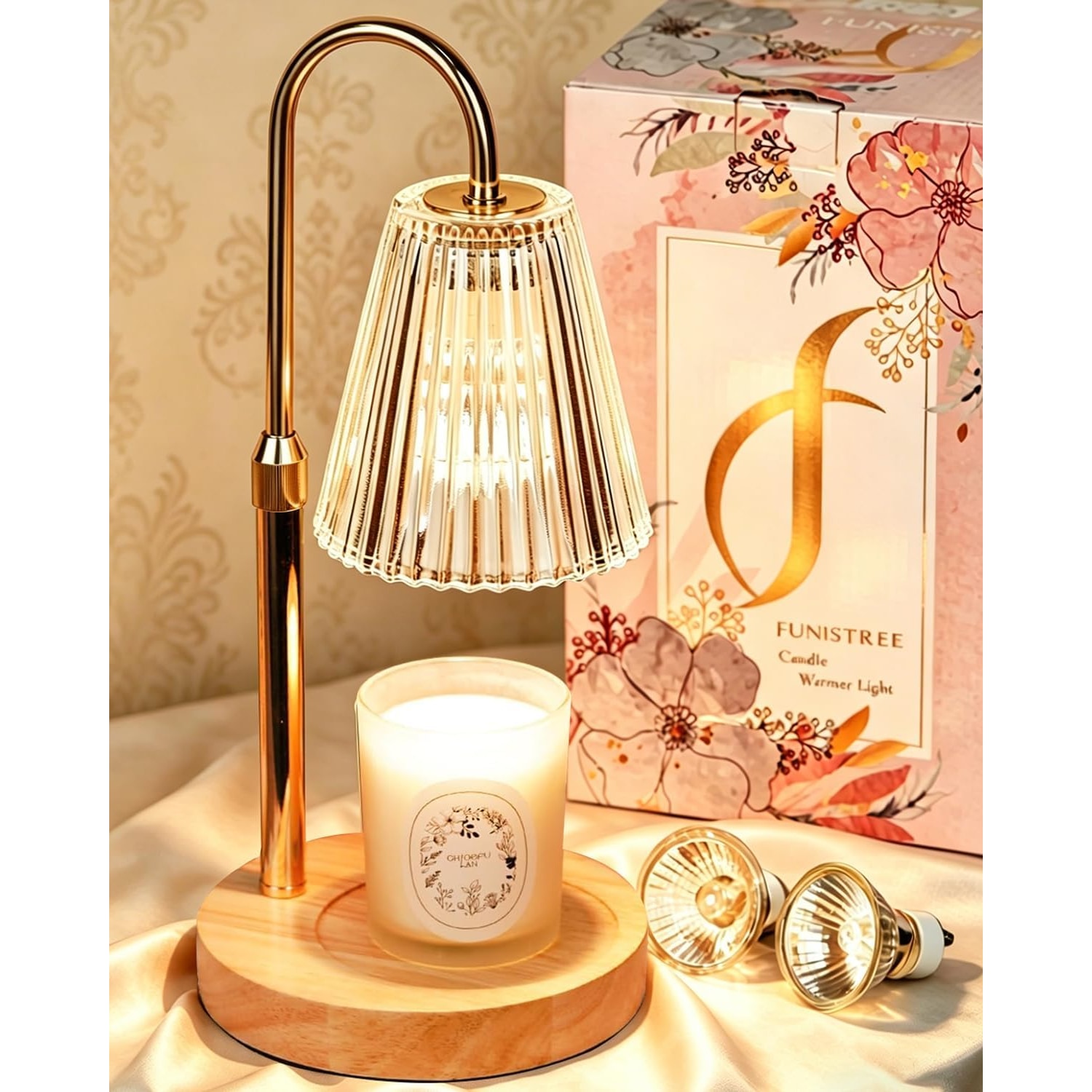
- Place the jar under the lamp and set the shade so the bulb is centred over the surface.
- Warm until the whole top layer, edge to edge, has gone soft or liquid.
- Switch off and let the wax set level.
It may take more than one go, and a very deep tunnel may need a few sessions. The lamp does not use up the wick, so the candle is still there to be lit if you want.
How to stop it happening again
- Let the first burn reach the edge.
- Or skip the flame and use a warmer lamp from the start, so the surface stays flat.
- Trim the wick to about 5 mm before each lit burn.
See which candles work best in our guide to candles for warmer lamps, or browse the lamps.
Lamps for rescuing a tunnelled candle


Questions people ask
Why does my candle tunnel?
The first burn is the most important. If you blow the candle out before the melt pool reaches the edge of the jar, the wax keeps a "memory" and each later burn follows the same narrow ring, leaving a tunnel.
Can a warmer lamp fix a tunnelled candle?
Often yes. Warm the candle under the lamp until the top layer is soft right across the surface, then switch off and let it set flat.
How long should the first burn be?
A common rule of thumb is about one hour per inch of candle diameter, until the melt pool reaches the edge. Always follow the candle maker's own advice.