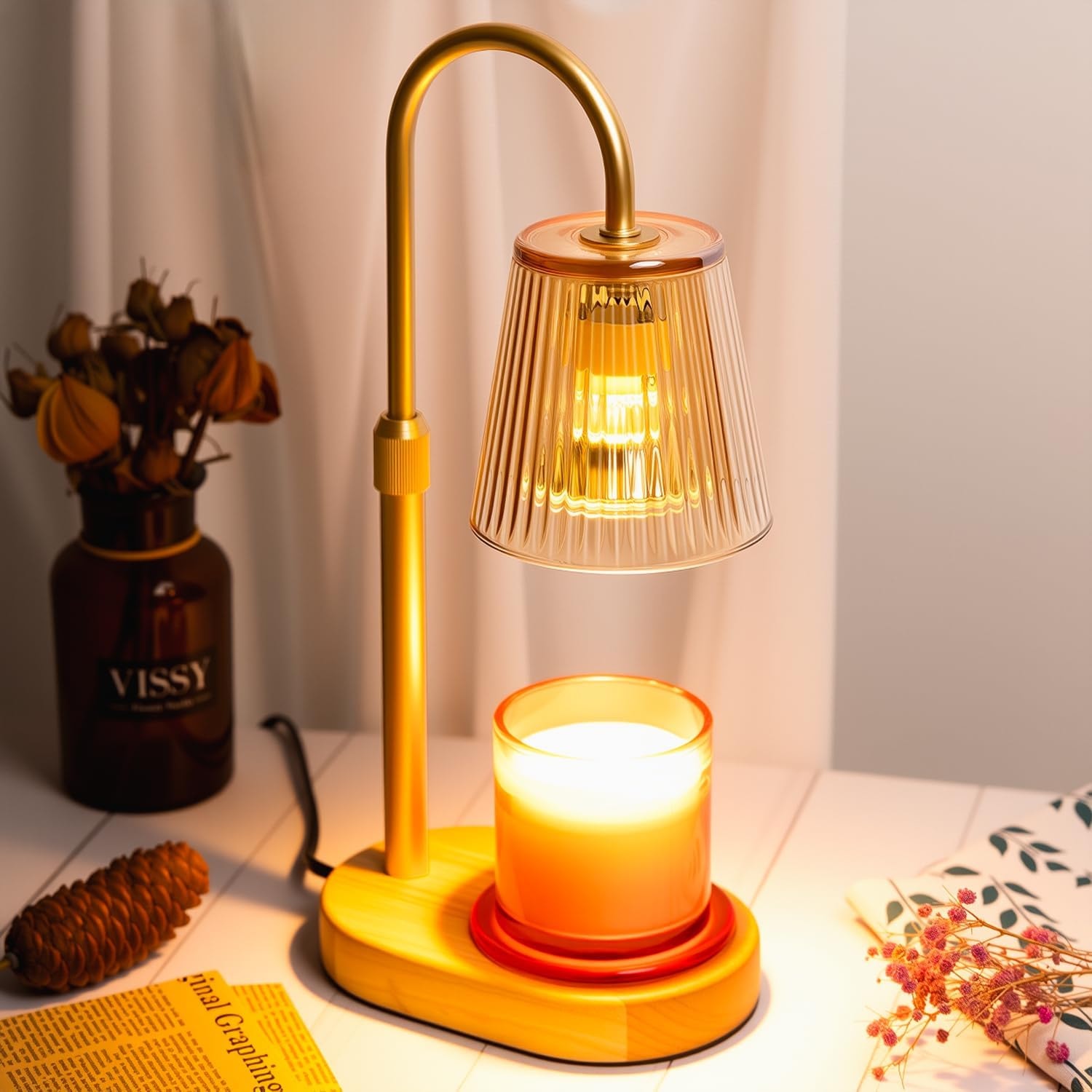
The complete guide
Is a candle warmer lamp actually worth it? The honest maths
A candle warmer lamp costs about what a decent candle costs, and it is fair to ask whether it earns that. Here is the arithmetic, without the marketing.
What a burned candle actually costs you
A mid-range 200 g scented jar candle in the UK runs roughly £15 to £25 and gives about 35 to 45 hours of burn time. Used properly — long enough sessions to melt edge to edge each time — that is perhaps six weeks of evenings.
Used the way most people actually use candles, in short bursts, it tunnels. A tunnelled candle strands a ring of wax around the glass that never gets used, and it is not unusual to throw away a third of what you paid for.
What changes on a warmer
Nothing is burned. The wax is not fuel any more; it is just the thing holding the fragrance. What you lose per session is the fragrance oil evaporating off the surface, which is a fraction of the mass.
The practical result people report is candles lasting several times longer, and none of them being thrown out half-used. The exact multiple depends on how hot you run it and how long — but the third of the jar that tunnelling used to strand is recovered outright, before you count anything else.
So the payback
On this £23.99 lamp, if you burn a £20 candle roughly every six weeks — around £170 a year — and the warmer cuts that to a candle every three or four months, the lamp has paid for itself inside the first two candles. Even on modest assumptions it is one of the few homeware purchases with a genuinely short payback.
Against that, count the running cost. The bulb draws around 50 W, so four hours a night is about 0.2 kWh — a few pence at current UK rates, and rather less than most people expect. Bulbs are the other cost: they are inexpensive, they last a long time, and two come in the box.
The reasons it might not be worth it for you
If you burn candles for the flame. A warmer glows, it does not flicker. Some people love candles for the movement, and no warmer replaces that.
If you use candles occasionally. If a candle comes out twice a year at Christmas, you are not wasting enough to recover.
If you have nowhere to put it. It needs a permanent spot with a socket. A candle lives in a cupboard between uses; this does not.
If your candles are cheap. The maths above works because good candles are expensive. If you buy £4 supermarket candles, the saving is real but the payback is far slower — though you may still want one for the smoke and soot alone.
What it is genuinely best at
Rescuing candles you have already ruined. Almost everyone has two or three tunnelled jars in a cupboard with an inch of wax welded up the sides. A warmer melts the whole surface, so those come back into use immediately — which for many people covers the cost of the lamp on day one, without buying a single new candle.
The short version
If you burn good candles regularly, a warmer pays for itself in about two candles, costs pennies an evening to run, and recovers the tunnelled jars you have already given up on. If you burn candles rarely, or mainly for the flame, buy the candle instead.