The complete guide
How to set up a candle warmer lamp so your candle melts evenly
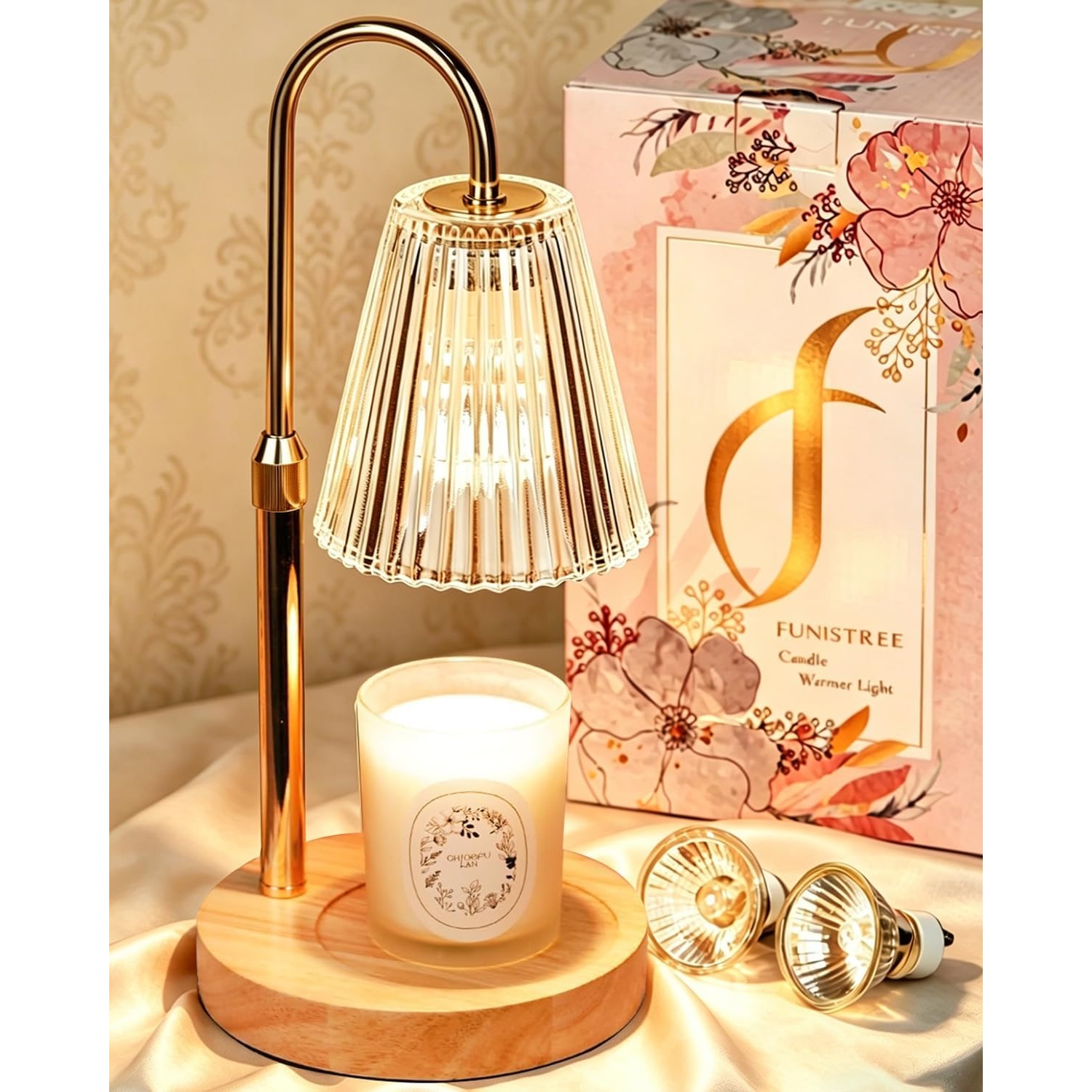
A candle warmer lamp is a simple object, and most of the difference between one that delights you and one that sits in a cupboard comes down to how you set it up in the first week. This guide covers the three things that matter — clearance, brightness and the candle itself — and the small habits that keep a warmed candle looking as good as it smells.
Get the clearance right first
The single adjustment that changes everything is the gap between the bulb and the top of the wax. Too far away and the surface never quite melts; too close and you risk overheating the rim of the jar and scorching the very top layer.
Start with the shade about 2 to 3 cm above the rim of your candle. Switch on at a middle brightness and give it fifteen to twenty minutes. You are looking for a shallow, even pool of liquid wax across the whole surface — not a deep well, and not a dry ring at the edges. If the edges stay solid, lower the shade a little or step the brightness up. If the wax goes liquid within a couple of minutes and smells sharp rather than fragrant, you are running it too hot: raise the shade or step down.
Once you have found the setting for a particular candle, it will be the same every time you use that candle, so it is worth the twenty minutes.
Brightness is a heat dial, not a mood dial
On this lamp the bulb is both the light and the heater, so the four brightness levels are really four melting speeds. That has a useful consequence: you can choose how strongly the room smells.
A low setting gives a soft glow and a slow release, which suits a bedroom or a long evening where you want the scent to be a background note. The top setting fills a living room quickly, which is what you want when people are arriving in half an hour. Most people settle on running it high for the first twenty minutes to build the pool, then dropping it down to hold the scent steady.
Choosing candles that warm well
Nearly any jar candle works, but some are noticeably better.
Soy and coconut waxes have lower melt points and give up their fragrance readily at warmer-lamp temperatures — they are the easiest to get a good result from. Paraffin candles work fine too but may want a slightly closer shade. Heavily fragranced candles obviously throw more scent, but so do wide candles: surface area matters more than volume, because everything happens at the top.
Glass jars are ideal — they take the heat and let you see the pool. Metal tins work, and heat up faster, so start further away. Avoid anything in a plastic container, anything with dried flowers or wooden decorations set into the wax surface, and candles with lids you have to leave on.
The habits that keep it looking good
Let each session finish properly. Switching the lamp off and leaving the candle in place lets the pool set flat, which is what gives a warmed candle its clean, poured-looking surface. Moving a jar while the wax is liquid is how you end up with a lopsided candle and wax on the base of the lamp.
Wipe splashes off the wooden base while they are still soft. Cold wax on wood needs scraping; warm wax needs a cloth.
Do not trim off the wick unless it is genuinely in the way. Leaving it means you can still light the candle normally if you ever want to, and it does not affect the warming at all.
When to switch it off — and when to use the timer
The timer exists because the whole appeal of a flameless candle is being able to stop paying attention. Two hours suits an evening in one room. Four covers an afternoon of working from home. Eight is the setting to use if you want the bedroom to still smell of the candle when you fall asleep, without lying there wondering whether you left something burning.
There is no need to run it any longer than that. Once the top layer has been liquid for a while it has given up most of what it is going to give up that session; leaving it on for six hours does not make the room smell six times better, it just uses the fragrance up.
The short version
Shade 2 to 3 cm above the rim, medium brightness, twenty minutes to a full even pool. High to fill a room, low to hold it. Soy and coconut candles are the easiest to warm; wide beats tall. Let the wax set before you move anything, and use the timer so you never have to think about switching it off.